
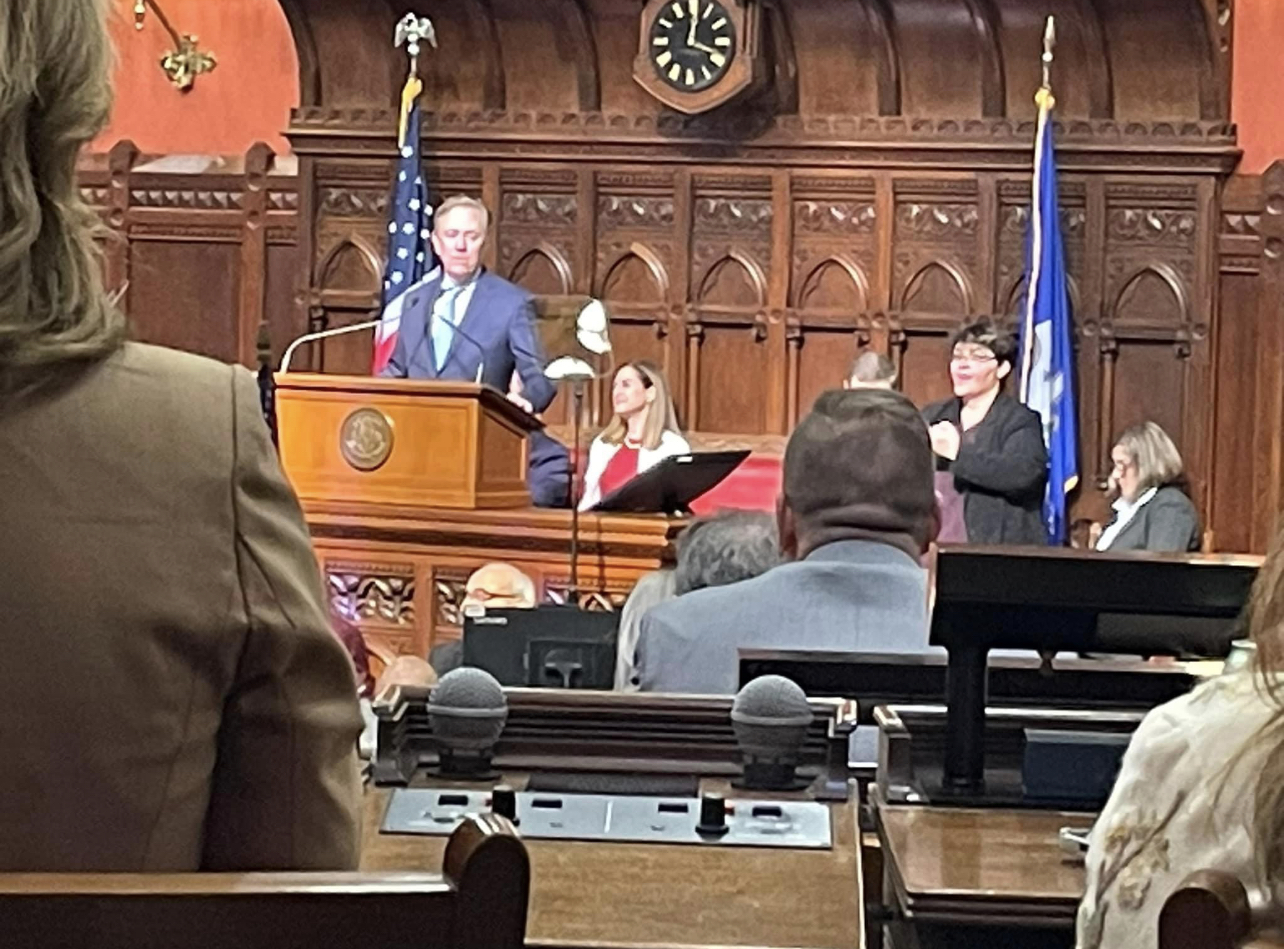
Hartford CT– This Wednesday, February 8, 2023, our state legislature, the Connecticut General Assembly joined together in the House Chamber for the State Budget Address to be given by Governor Ned Lamont. The latest budget address takes place a decade after Connecticut was considered to be facing a “Permanent fiscal crisis.”
Reporting for the Echo, I was escorted into the state capitol complex and met with the breathtaking views of 1800s architecture that still remains functional within the capitol today. As I went behind the legislators on the chamber floor, the hustle and bustle was apparent in the room as photographers clamored about, and members of the General Assembly ushered in, as they prepared themselves for the business to come.
Shortly after settling in Speaker of the House Matt Ritter spoke, and was swift in doing so. Members of the CGA have previously described him as punctual, and this was proven true. A moment of silence was also observed for State Representative Quentin “Q” Williams, who tragically passed last month.
Governor Lamont was shortly after escorted in and began to cover the plan for the $50.5 billion budget in which he hopes to permanently end the fiscal crisis. Lamont proposed the first income tax cuts in the state of Connecticut in over 30 years. “We will continue to move from rescue to recovery, from lifelines, to ladders, to opportunity.” Lamont stated, as he began to delve into budget details.
The initial fiscal crisis in Connecticut began following the effects of the Great Recession in the late 2000s, and an exodus of major employers such as General Electric. With already high income and property tax rates, Connecticut struggled to recover from the difficulties that the recession wrought upon Connecticut residents.
The newly proposed income tax cuts include a cut from 3% to 2% on the first $10,000 of earned income, and from 5% to 4.5% for individuals who make up to $50,000. In addition, Lamont proposed a permanent increase in the Earned Income Tax Credit, from 30.5% percent to 40%, which the Governor says will mean families earning less than $50,000 will pay zero income tax. Overall, this would equate to about $500 million in annual savings for taxpayers.
Lamont also covered important information when it comes to the cost of Education. The main initiative is to hire more teachers and provide more job opportunities in the education field. This support would include $10 million for grants dedicated to staffing schools. A 50% tax credit for employers in relation to student loan debt was also discussed. Lamont also referred to to the debt-free community college initiative, but is this enough?
The proposal comes after rallies that occurred in Hartford in relation to student debt and proposed hikes in tuition for Community College and State University students. It appears that these commitments may not be enough to quell the outrage of young people pursuing their education. A public hearing will be held on February 15th in regard to the budget for state universities. The hearing is expected to be contentious, as the budget did not offer major investment for Connecticut university students.
The address also discussed ongoing support of small businesses and housing issues in order to be able to grow the current economy. The initiative includes a new Housing Trust Fund, and more efforts into faster certification at jobs so that citizens can become homeowners. Medical debt relief also played a big role in the current budget, with $34 million being dedicated to covered Connecticut health insurance. As well as discount cards being provided for different prescriptions to those who are lower income.
Carbon emissions were also discussed, and the steps that are being put in place in order to be able to combat climate change, including a $55 million down payment for electric car usage, a renewed agreement to provide carbon-free nuclear power from Connecticut’s Millstone Nuclear Power Station, and heavier use of wind power across the state.
The proposed budget now heads to the appropriations committee for public hearings, before being debated and voted on by the legislature.
Leave a Reply